Pickleball is one of the fastest-growing sports in the world, and with it comes a unique set of terms that every player eventually picks up. Whether you’re a beginner learning the basics, an intermediate player sharpening your strategy, or a competitive athlete chasing precision, understanding the language of the game makes everything easier.
This glossary is designed to simplify pickleball terminology so you can follow conversations on the court, improve your gameplay, and choose the right equipment with confidence. At Dragonfly, we believe that when you understand the game better, you play better — and enjoy it even more.
Let’s dive into the essential terms every player should know.
Pickleball Terms & Glossary:
Ace - A serve that lands in and isn’t touched by the opponent.
Approach Shot - A shot hit while moving toward the non-volley zone (kitchen).
Around-the-Post (ATP) - A shot that goes around the net post instead of over it.
Banger - A player who hits hard, flat shots most of the time.
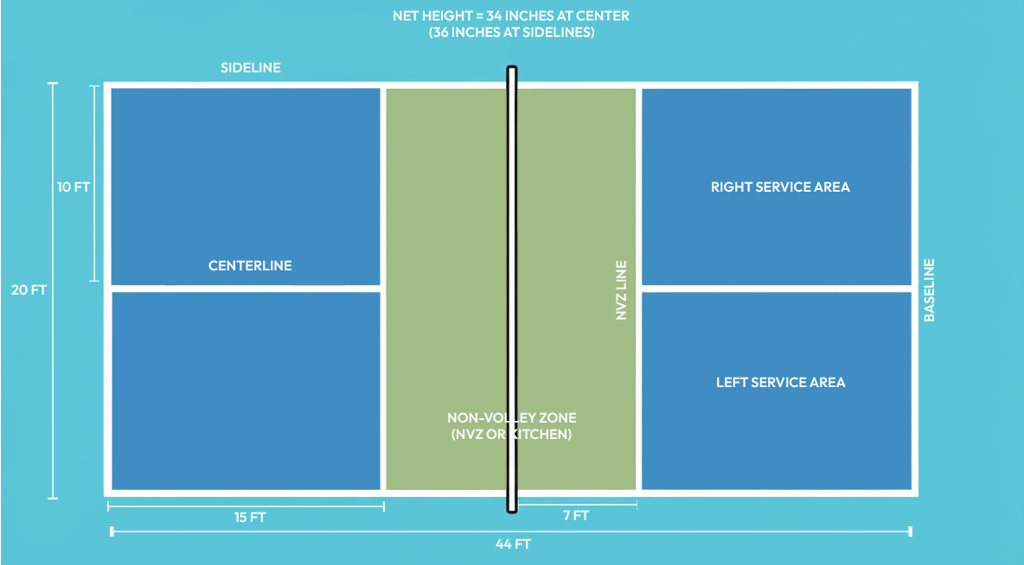
Baseline - The line at the back of the court.
Bounce Rule (Two-Bounce Rule) - The serve and the return must each bounce once before players can volley.
Carry - When the ball stays on the paddle too long — an illegal shot.
Centerline - Divides the service boxes into left and right sides.
Champion Shot - A trick shot where the paddle hits the ball behind the player’s back.
Crosscourt - A diagonal shot to the opposite side of the court.
Dink - A soft shot that lands in the opponent’s kitchen.
Doubles - Four-player game (two per side).
Drive - A powerful, fast shot aimed at pushing opponents back.
Drop Shot / Third Shot Drop - A soft shot that arcs into the kitchen, used to reset the point.
Erne - A legal volley hit while jumping or standing outside the sideline near the net.
Fault - Any rule violation that stops play.
Grip Size - Diameter of the handle; affects comfort and control.
Groundstroke - A shot hit after the ball bounces.
Half-Volley - A shot struck immediately after the bounce — almost like a scoop.
Kitchen (Non-Volley Zone) - The area near the net where you cannot hit a volley.
Let Serve - A serve that hits the net but still lands in. (Note: now often played as a live ball depending on the rule set.)
Line Judge - a person who decides whether balls are in or out in a match.
Lob - A high, deep shot to push the opponent back.
Match Point - A point that if won, ends the match.
Mini-Dink Rally - A slow, soft rally near the net.
NVZ (Non-Volley Zone) - Same as the kitchen — zone where volleying is not allowed.
Overhead Smash - A powerful overhead hit used to finish a point.
Paddle Face - The flat striking surface of the paddle.
Paddle Weight - Light, midweight, or heavyweight; affects power and control.
Pickle! - Call used to start a game (like “Play!”).
Pickled - Losing a game 11–0.
Poach - When a doubles player crosses over to hit their partner’s shot.
Rally Scoring - A scoring system where every point counts, regardless of who served (some leagues).
Reset Shot - A soft shot to slow down fast play and regain control.
Server Number - In doubles, whether Server 1 or Server 2 is serving.
Side-Out - Serve changes to the other team.
Soft Game - Strategy focused on dinks, drops, and control instead of power.
Spin Shot - A shot where the ball rotates (topspin, backspin, sidespin).
Split Step - A small hop used to prepare for the opponent’s shot.
Sweet Spot - The optimal contact area on the paddle.
Third Shot - Your team’s shot after the serve return — crucial in strategy.
Topspin - Spin that makes the ball dip downward.
Unforced Error - A mistake made without pressure from the opponent.
Volley - Hitting the ball before it bounces.
Who’s First? - A question players ask to determine the first server.